

What You Need to Know
- A fine dining restaurant contractor in Indonesia manages complex acoustic engineering, precision lighting, and premium materials over 6-12 months
- Modern establishments prioritize flexibility and premium finishes to meet evolving operational demands
- Selecting the right contractor approach early prevents costly structural problems and inefficiencies
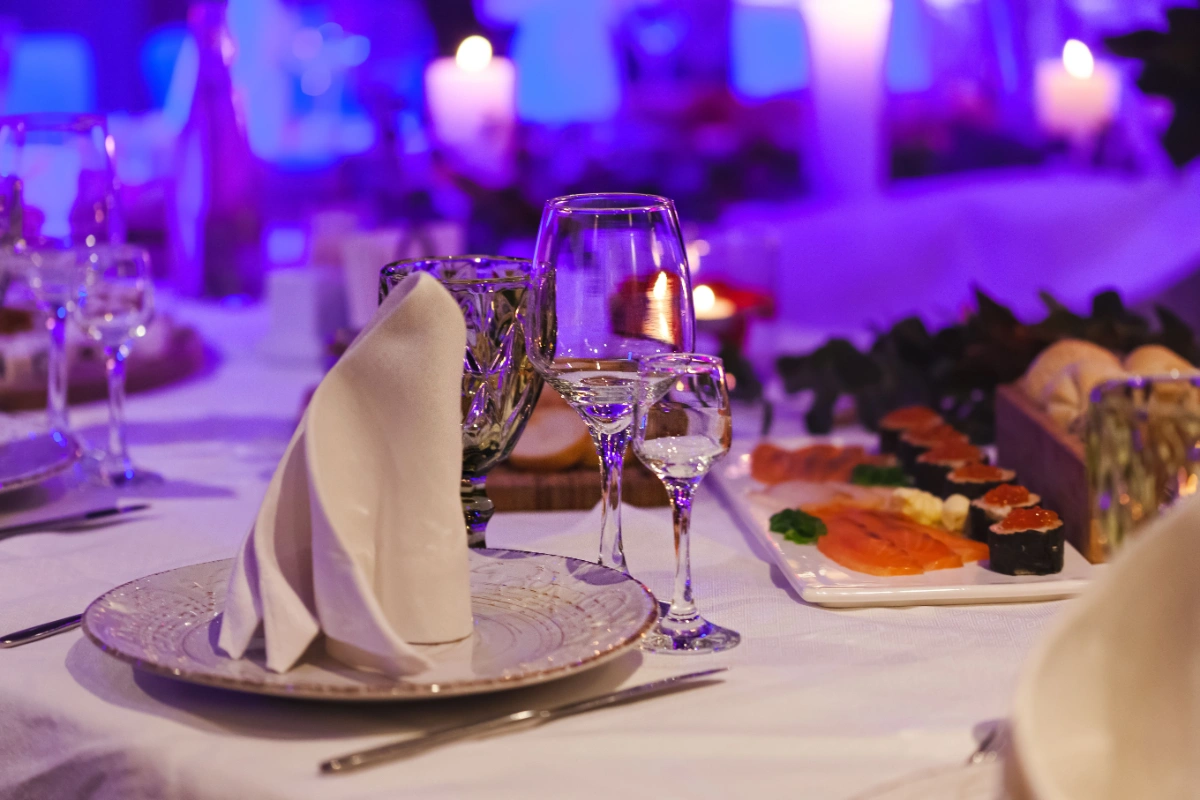
Source : Pexels | Leonardomartin Pagano
A fine dining restaurant contractor in Indonesia must master acoustic engineering, precision lighting systems, and premium imported materials sourcing. When you work with the right team, you’re investing in systems designed for longevity and refined aesthetics. Trendy cafes, on the other hand, prioritize layout flexibility and industrial aesthetics with faster construction timelines.
These establishments value adaptability and premium finishes as top priorities for modern operations. A fine dining restaurant contractor typically requires 6 to 12 months for project completion, while trendy cafes can be finished in 3 to 6 months due to simpler technical requirements.
Fine Dining Restaurant Contractor in Indonesia
Why Fine Dining and Trendy Cafe Construction Needs Differ
When you commission a restaurant space, the choice between fine dining and trendy cafe fundamentally changes how a contractor must approach the project. These two concepts demand entirely different architectural priorities, material specifications, and operational systems.
1. Fine Dining Requirements
A fine dining establishment requires precision in every detail, soundproofing for guest privacy, carefully calibrated lighting that flatters both food and ambiance, and structural elements designed to last decades.
2. Trendy Cafe Priorities
A trendy cafe, by contrast, prioritizes visual impact and operational flow. Its beauty lies in efficient layouts, statement materials, and the ability to refresh the space as trends shift.
3. Why the Distinction Matters
The stakes of this difference are high. Selecting a fine dining restaurant contractor for a cafe project means overbuilding in areas where you do not need it and underinvesting in the flexibility that defines modern coffee culture.
Conversely, hiring a cafe-focused contractor for fine dining creates acoustic liabilities, lighting failures, and material degradation that compromise the entire guest experience. Understanding these distinctions before ground is broken determines whether your investment yields a thriving venue or a costly structural compromise.
Fine Dining Restaurant Contractor in Indonesia, Focus on Luxury, Detail, and Premium Experience
Fine dining construction is an engineering discipline as much as a design exercise. Every system must serve the core mission, creating an atmosphere where guests feel they are in an exclusive, carefully curated space. The following specialized demands define this work.
1. Soundproof Acoustic Treatment for Guest Privacy and Comfort
A fine dining experience depends on conversation intimacy. Diners expect to speak with their companions without projecting to adjacent tables, and the kitchen’s operational noise must remain imperceptible to the dining floor. This requires wall treatment with acoustic foam or fiberglass panels, often combined with double-wall construction and resilient channels that decouple interior walls from structural elements.
Ceiling systems use sound-absorbing tiles rather than hard surfaces. Many fine dining contractors also specify custom-built partition systems between tables that are visually integrated into the overall design. This level of acoustic engineering typically adds 8 to 12 weeks to the construction schedule and represents 5 to 8 percent of total build costs.
2. Architectural Lighting Installation Requiring Careful Planning and Precision Placement
Fine dining lighting is rarely off-the-shelf. Each fixture must be positioned to highlight food presentation, create flattering skin tones, and establish mood. The positioning must integrate with the overall spatial design.
Many luxury restaurants work with dedicated lighting consultants who conduct photometric analysis and mock-up testing before installation begins. The work involves concealed wiring, dimmer circuits, and sometimes integrated smart systems that allow servers to adjust ambiance by dining period.
3. Precision Fixture Placement and Installation Timeline
Recessed lighting, track systems, and accent lighting for artwork or architectural features are often specified in the design development phase rather than left to field decisions. This precision approach means lighting installation alone can occupy 4 to 6 weeks of the project timeline.
4. Selection of Imported Marble and High-Quality Wood Materials
Materials in fine dining establishments communicate permanence and craftsmanship. Imported marble for flooring and wall cladding, solid hardwood for custom cabinetry and table bases, leather for seating, and brass or stainless steel for fixtures are standard specifications.
These materials are chosen not only for appearance but for durability under high-traffic use and ease of maintenance that preserves their finish for years.
5. Sourcing and Procurement Strategy
A fine dining restaurant contractor in Indonesia must source these materials from vetted suppliers. You will need to manage lead times that often extend 8 to 16 weeks and ensure installation by craftspeople skilled in working with stone and premium wood.
The material specification and procurement phase often runs parallel to construction and can be the critical path driver in the overall schedule.
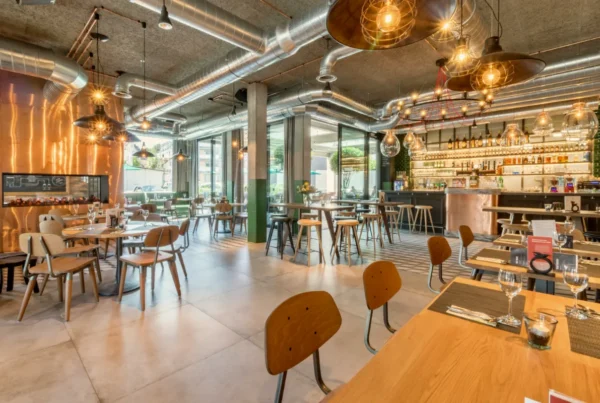
Source : Pexels | Julia Filirovska
Trendy Cafe Contractor – Focus on Flexibility, Aesthetics, and Space Efficiency
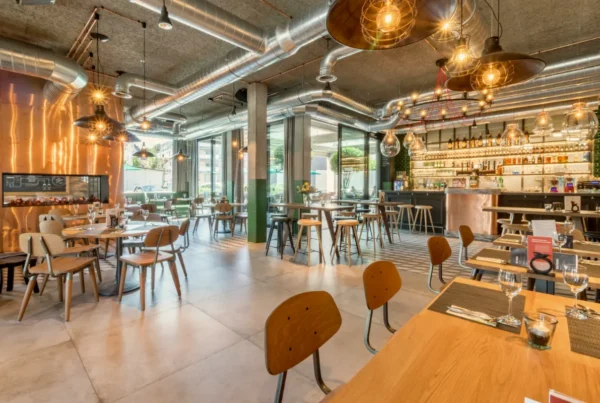
Trendy cafes operate on a different logic. They attract younger clientele drawn by visual identity, social media appeal, and efficient service flow. The construction priorities reflect this, fast execution, bold material choices that age gracefully or can be refreshed, and layouts that move customers from entry to order counter to seating without friction.
The following priorities define trendy cafe construction:
- Layout arrangement that maximizes visitor flow and daily operational efficiency, ensuring the queue from entry to order point does not create bottlenecks and seating clusters encourage lingering without blocking circulation
- Selection of industrial or minimalist materials such as polished concrete, exposed brick, steel beams, and FSC-certified wood that highlight character without requiring imported stone or specialized finishes
- Integration of artistic pendant lighting to create a warm, photo-friendly atmosphere that does not require custom positioning or dimmer sophistication but still photographs well for social platforms
- Creative, artistic seating arrangements as a distinct draw for younger visitors, using flexible modular furniture, mismatched vintage chairs, or custom-designed pieces that signal intentional curation rather than formal uniformity
These design choices work together to create spaces where you feel the intentionality behind every element.
When you choose a trendy cafe contractor, you’re investing in someone who understands that today’s younger customers value authenticity and efficiency equally. They want to move through your space smoothly, find the aesthetic experience Instagram-worthy, and feel like they’ve discovered something genuinely curated rather than off-the-shelf.
Comparing Materials, Furniture, and Technical Systems
The physical specifications of fine dining and trendy cafe construction show how differently two successful hospitality spaces can be built. The table below illustrates the material and systems choices that distinguish them.
| Aspect | Fine Dining Restaurant | Trendy Cafe |
| Floor and Wall Materials | Imported marble, polished stone, or hardwood flooring. Walls finished with paint, textile, or specialty plaster | Polished concrete, sealed raw brick, or light wood. Industrial finishes left visible |
| Furniture Quality and Durability | Custom upholstered seating with high-grade leather, solid wood bases, handcrafted tables designed for permanence | Mix of custom and vintage pieces, modular seating, durable but aesthetic-driven selections suited to refresh cycles |
| Electrical and Water Systems Capacity | High-capacity systems supporting multiple independent bar stations, kitchen equipment, and dedicated lighting circuits. Redundant infrastructure | Standard capacity systems scaled to coffee service and food preparation. Simpler kitchen requirements. Single service counter typically sufficient |
| Acoustic and Environmental Control | Double-wall construction, acoustic ceiling, HVAC zoned by area, temperature control calibrated for guest comfort during long dining periods | Standard insulation, open ceiling treatment acceptable, HVAC scaled to fast turnover and shorter occupancy periods |
| Lighting Systems | Custom-designed, dimmer-controlled, integrated with architectural elements. Often requires lighting consultant involvement | Standard pendant and ambient fixtures. Simple dimmer or on-off control. Emphasis on visual warmth through fixture choice |
Find a Fine Dining Restaurant Contractor in Indonesia at Ardeco
Building a fine dining restaurant or stylish cafe requires a contractor who understands the precision demands of hospitality construction. Your project deserves expertise that anticipates structural challenges, manages material sourcing, and coordinates the specialized trades that bring hospitality design to life. Whether your vision is an intimate fine dining venue with flawless acoustics and curated ambiance, or a trendy cafe designed for efficient service and visual impact, the early stages of contractor selection determine success.
Our Experience in Restaurant and Cafe Construction
Ardeco brings over 14 years of experience in commercial restaurant and cafe construction. The team has completed 238 projects ranging from high-end dining establishments to modern coffee concepts.
Your venues benefit from recognized portfolio work such as Tami Yakitori at Living World Mall, Tanamera Cafe, Bacha Coffee at Plaza Indonesia, and full-scale commercial developments. This depth of experience means Ardeco understands both the luxury precision that fine dining demands and the efficient, trend-responsive approach that makes cafes thrive.
Why Choose Ardeco
Your project benefits from transparent project planning, fixed budgeting without hidden markups, and adherence to timelines that respect your operational launch date. Ardeco’s commitment to accuracy in design, budget, and schedule is expressed through three core principles:
- Tepat Waktu (On Time)
- Tepat Desain (Right Design)
- Tepat Anggaran (Right Budget)
This ensures that your restaurant or cafe construction stays aligned with your vision from concept through opening day.
Contact Us Today
Contact us through contact us via WhatsApp 或 visit our portfolio to discuss your fine dining restaurant or cafe construction project with our experienced team.
FAQ
How long does it typically take a fine dining restaurant contractor in Indonesia to complete a project?
Fine dining projects generally require 6 to 12 months from design completion to opening readiness, depending on scope, material sourcing lead times, and complexity of acoustic or custom systems.
Trendy cafes typically finish in 3 to 6 months due to simpler technical requirements and faster material availability. The critical variables are custom fixture fabrication, imported material procurement, and coordination of specialized trades such as lighting installation.
Why is trendy cafe construction more cost-efficient than a luxury restaurant?
Cafe construction avoids the expense of acoustic engineering, custom lighting design, imported premium materials, and the specialized labor required to install them to fine dining standards. Industrial or minimalist materials are locally sourced and installed faster, with savings typically ranging from 25 to 40 percent per square meter compared to fine dining build-outs.
Must a fine dining restaurant contractor in Indonesia have acoustic specialization?
Acoustic expertise is not always in-house but must be accessible to the contractor. Many fine dining contractors work with specialized acoustic consultants during design and retain their involvement during installation to ensure sound control meets specifications.
How can you make sure the construction budget does not balloon midway?
Transparent cost documentation from the outset is essential. Request a detailed Bill of Quantities (BQ) or itemized budget that breaks down labor, materials, and contingency separately. The contractor should clarify which items include material lead times and which are subject to market pricing.
When is the best time to involve a fine dining restaurant contractor in Indonesia in your project?
Engage a contractor during the design development phase, before final drawings are completed. Early contractor involvement allows them to flag constructability issues, optimize material selections for cost and timeline, and identify long-lead items that must be ordered immediately.
Reference
- Tech4Serve. (2026). Premium Dining 3.0: How Luxury Restaurants Are Redefining Experience, Value, and Growth. http://tech4serve.com/premium-dining-3-0-how-luxury-restaurants-are-redefining-experience-value-and-growth
- Restroworks. (2025). Fine Dining Restaurant Statistics – Industry Growth, Revenue & Dining Trends. http://www.restroworks.com/blog/fine-dining-restaurant-statistics
- Zilicius. (2026). How Fine Dining Restaurants Improve Guest Experience. http://zilicius.com/blog/how-fine-dining-restaurants-can-improve-guest-experience-with-technology


One Comment